Comparative Market Analysis (CMA) Template
Six adjusted comps to a weighted, defensible value and a one-page client report
An Excel CMA template for agents and investors. Enter up to six sold comps with size, condition, location, and feature adjustments; weight them into an indicated value and print a one-page report for the client or the offer.
Most pricing mistakes come from eyeballing three listings and splitting the difference. Sellers hear a number with no method behind it, wholesalers write offers off a Zestimate, and flippers discover the ARV was optimistic after the rehab is paid for. The fix is the same approach appraisers use: adjust each comparable to answer the question, what would this comp have sold for if it were the subject, then reconcile.
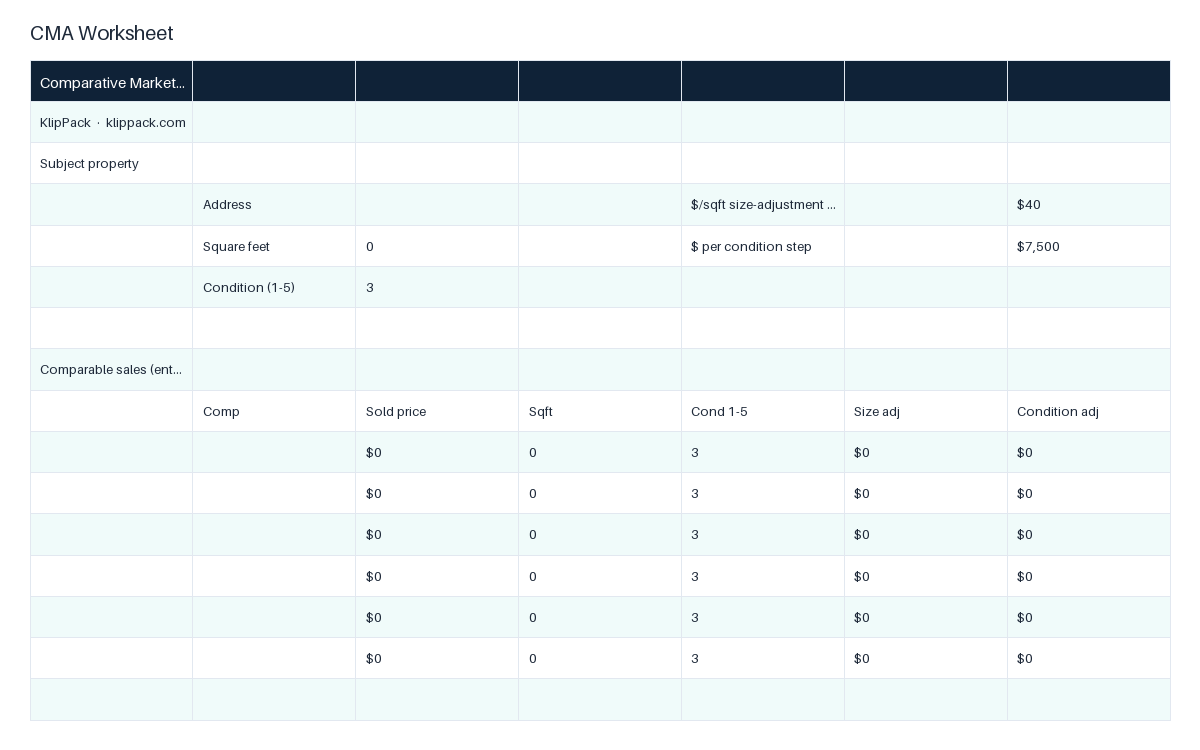
This workbook does exactly that in three sheets. The CMA Worksheet holds the subject's address, square footage, and a 1-to-5 condition rating, plus two adjustment factors you set once: dollars per square foot for size and dollars per condition step. Six comp rows take sold price, square feet, condition, and manual dollar adjustments for location and features; size and condition adjustments calculate automatically and each row returns an adjusted price. The Reconciliation sheet pulls the six adjusted prices and lets you weight each comp (give your closest, most recent, least-adjusted comps a weight of 2 or 3, weak comps 1 or 0) to produce a weighted indicated value, along with the low and high of the adjusted set. The CMA Report sheet is a one-page summary: subject, square footage, number of comps analyzed, adjusted comp range, the indicated market value in bold, prepared-by and date lines, and the opinion-of-value disclaimer. 44 formulas, no macros.
The result is a value you can explain line by line and a report you can print or PDF. To start, enter the subject's square footage and condition, set the two adjustment factors for your market, type in six recent sold comps from the MLS or county records, weight them on the Reconciliation sheet, and print the Report tab. For a flip or wholesale deal, the indicated value is your ARV; take it straight into the Deal Analyzer or Fix and Flip calculator.
Who it's for
For real estate agents preparing listing presentations and for wholesalers and flippers who need an ARV they can defend to a buyer or lender. Not for appraisers or anyone needing a USPAP-compliant report, and not an automated valuation; you supply the comps. For the full deal math after you have the value, use the Wholesale Deal Analyzer Pro or the Fix and Flip Profit Calculator.
Use it when
- A seller wants to list $40,000 above the neighborhood and you need to show them why not
- You are writing a wholesale offer tonight and need an ARV that will survive the cash buyer's own comps
- A hard-money lender asks how you got your ARV before funding the flip
- You are pricing an inherited house for a family that has three different numbers in mind
- You run several CMAs a week and want consistent adjustment factors across all of them
What you download
Every file in the XLSX download.
Inside the files
- CMA Worksheet: subject specs plus a 6-comp adjustment grid
- Automatic size and condition adjustments from two factors you set once
- Manual location and features adjustments per comp
- Reconciliation sheet: weight each comp, get indicated value and range
- CMA Report sheet: one-page print layout with disclaimer and sign-off
What changes once you use it
- 1Arrive at a value with a method you can explain to a seller line by line
- 2Set your market's size and condition factors once and reuse them on every CMA
- 3Weight strong comps up and weak comps down instead of averaging everything
- 4Hand over a clean one-page report instead of a screenshot of the MLS
- 5Use the same file for listing presentations and ARV on investment deals
Common questions
What software do I need?
Microsoft Excel or Google Sheets. Standard .xlsx with ordinary formulas and no macros. The range formula uses MINIFS, which needs Excel 2019 or later, Microsoft 365, or Google Sheets.
Can I use this for ARV calculations?
Yes. ARV is a comparable-sales value for the property in renovated condition. Rate the subject's condition as it will be after the rehab, use renovated comps, and the weighted indicated value is your ARV.
How are the adjustments calculated?
Size adjustment is subject square feet minus comp square feet, times your dollars-per-square-foot factor. Condition adjustment is subject condition minus comp condition, times your dollars-per-step factor. Location and features are manual dollar entries. Each comp's adjusted price is its sold price plus all four adjustments.
Why not a free template or ChatGPT?
Free CMA sheets usually average sold prices with no adjustments, and a chat answer cannot be handed to a seller as a report or recalculated when a comp changes. This file applies appraiser-style adjustments in the right direction, lets you weight comps, and produces a one-page report with the proper opinion-of-value disclaimer. It is a small file, priced like one, built so the method is correct.
Is this an appraisal?
No. The report says so in its disclaimer. A CMA is an opinion of value based on comparable sales. Lenders require a licensed appraisal; this template is for pricing listings, writing offers, and estimating ARV.
💰 Fund: Line up cash buyers and private money
Got this handled? Here's what comes next in the deal.
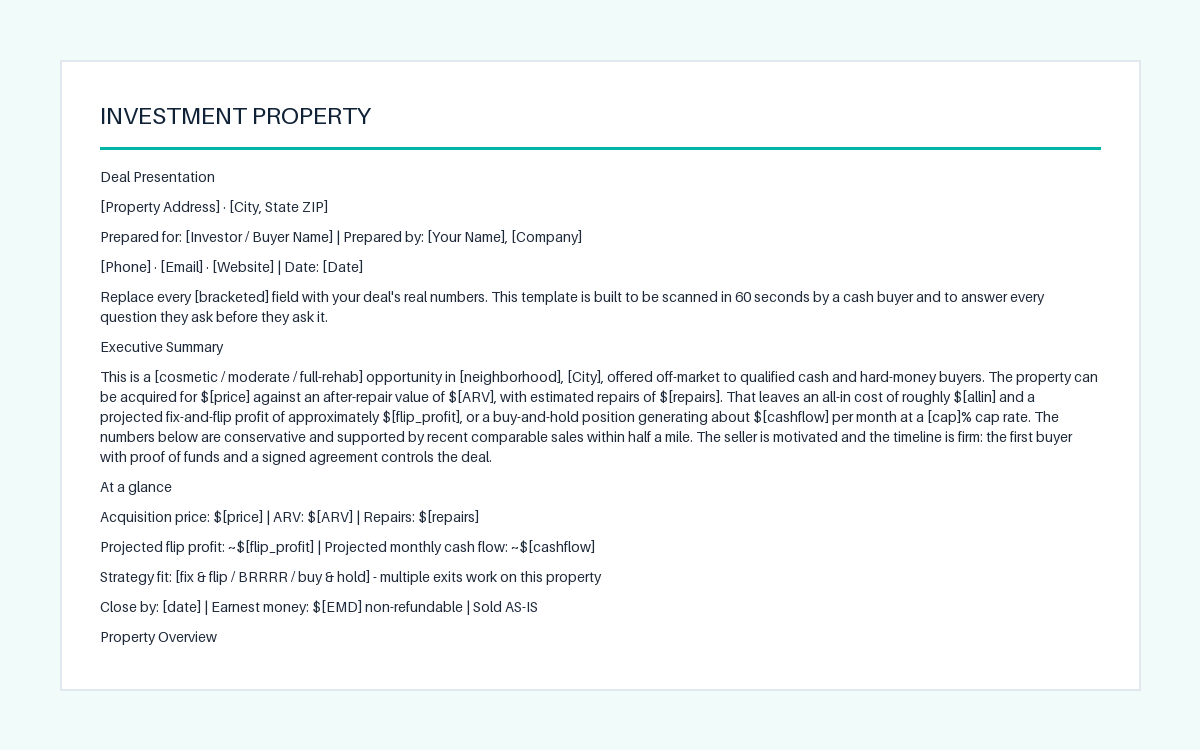
Cash Buyer Deal Presentation Template
Turn a deal into a one-read packet cash buyers can say yes to
- ✓Cover page with property, buyer, and your contact fields
- ✓At-a-glance block: price, ARV, repairs, flip profit, cash flow
- ✓Fix & Flip and Rental analyses laid out side by side
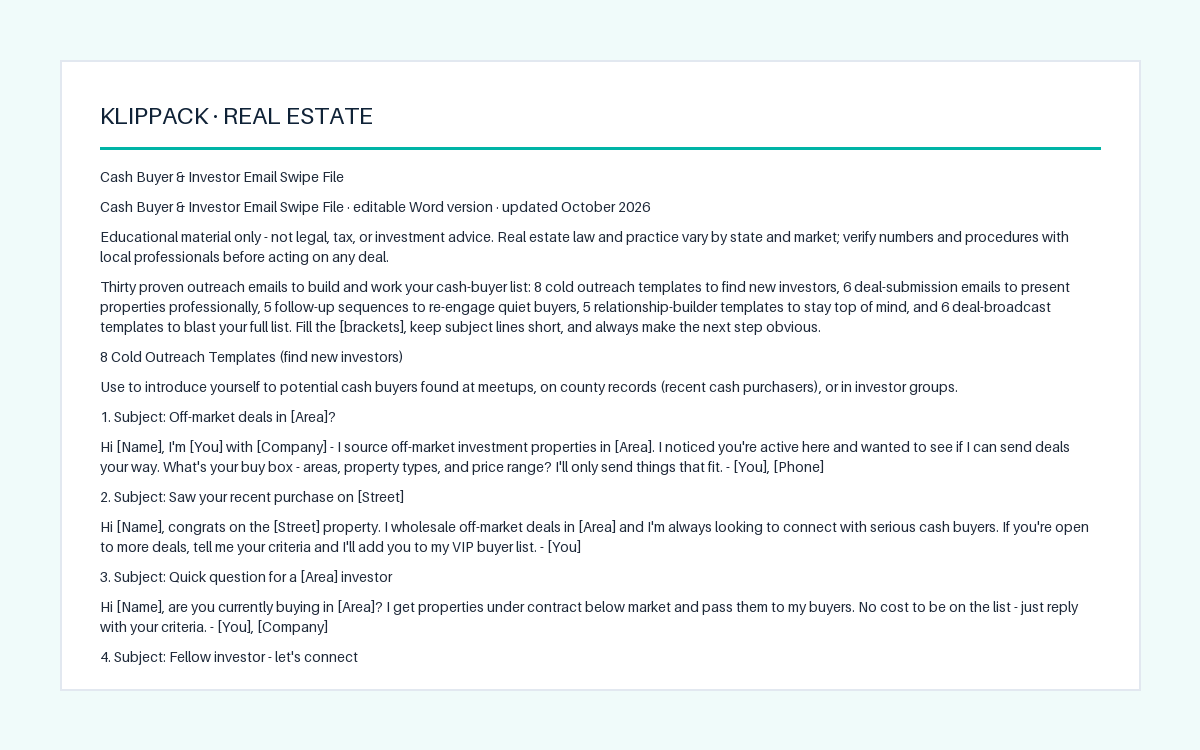
Cash Buyer & Investor Email Swipe File
30 fill-in-the-brackets emails to build and work a cash buyer list
- ✓8 Cold Outreach emails to introduce yourself to new investors
- ✓6 Deal Submission emails: flip, rental, pocket deal, price drop
- ✓5 Follow-Up emails to re-engage quiet buyers, ending in a last call
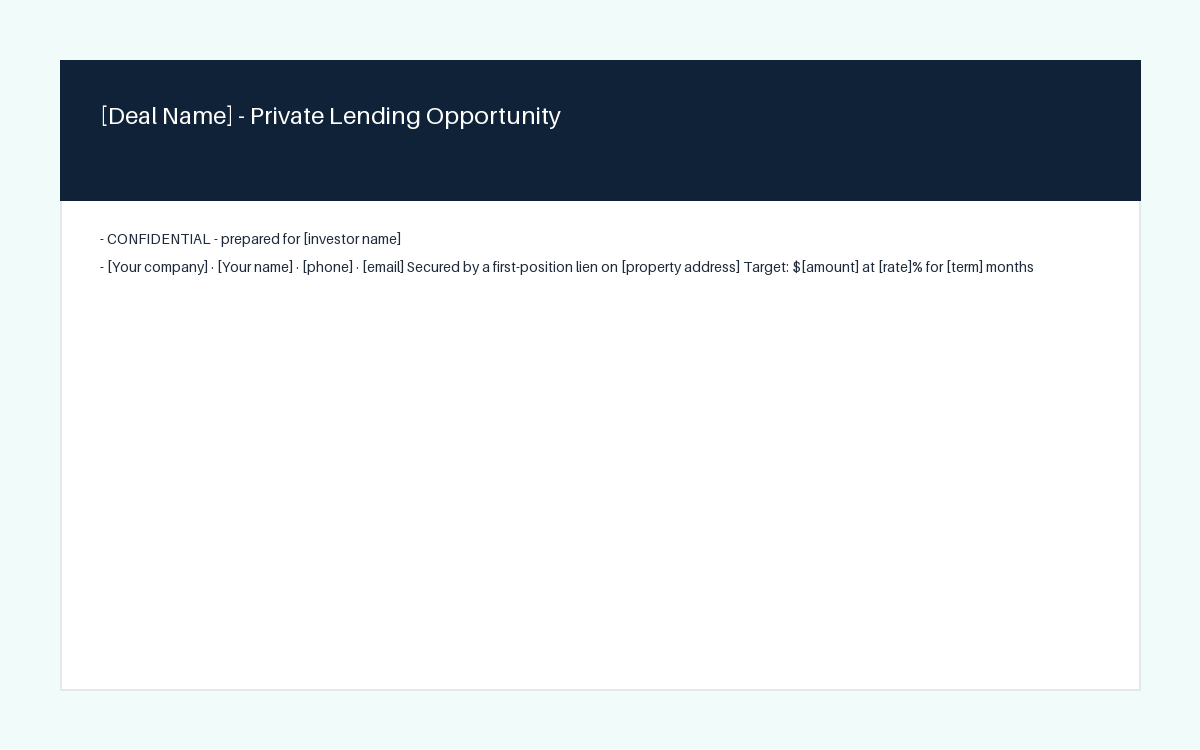
Private Money Pitch Deck Template
A 12-slide lender pitch with the security and downside slides investors ask for
- ✓Confidential cover: target amount, rate, term, and secured property
- ✓Opportunity, Track Record, and Team slides with bracketed proof points
- ✓Deal and Numbers slides: all-in cost, ARV, loan-to-ARV, worst case