Private Money Pitch Deck Template
A 12-slide lender pitch with the security and downside slides investors ask for
A 12-slide PowerPoint outline for raising a private first-lien loan on a flip or BRRRR deal: opportunity, track record, deal, numbers, structure, returns, security, timeline, risks, and next steps. With a 5-page PDF guide.
Private money is usually lost in the first meeting, not the last. A flipper shows a lender the house and the spread, the lender asks what happens if the rehab runs long or the market drops, and there is no slide for that. The money goes to the operator who answered the downside question before it was asked. Most first-time raisers do not know that the security, loan-to-value, and worst-case slides matter more than the profit slide.
This deck is 12 slides of lender-specific structure in an editable PowerPoint file, about 530 words, every figure a bracketed field. Slide 1 is a confidential cover with the target amount, rate, and term and the property the lien secures. Slides 2 to 5 cover The Opportunity, Track Record (projects, totals, average buy, rehab, and sale), The Team (operator, contractor, attorney or title company), and The Deal (address, price, why it is mispriced, ARV and comp count). Slide 6, The Numbers, builds all-in cost, projected gross profit, loan-to-ARV, and a worst-case sale at ARV minus 10 percent. Slide 7, Investment Structure, is the term sheet: amount, rate, term and extension, payment timing, promissory note plus recorded first-position lien, loss-payee status. Slide 8 compares the return to a CD over the same months. Slide 9, Security and Downside Protection, covers first-lien position, lender title insurance, a maximum loan-to-ARV, and what the lender owns on default. Slides 10 to 12 give the Timeline and Exit with a backup exit, plain-language Risk Disclosures (not FDIC insured, not a public offering, foreclosure takes time), and Next Steps that route funds through escrow only. The slides are text on a clean blank layout with no imagery, so you add your own photos, logo, and comps appendix.
You walk into the meeting with the order of argument a lender expects and the risk language already written. First 15 minutes: open the file and replace the cover brackets with your deal, amount, rate, and term; fill slides 5 to 7 from your deal analyzer, then adjust the loan-to-ARV and worst-case figures on slides 6 and 9 so they match; drop your last three project photos onto slide 3 and export to PDF. Have your attorney review slides 7, 9, and 11 before the first send.
Who it's for
For flippers, BRRRR investors, and wholesalers raising their first private loan on a single deal and pitching individuals rather than funds. Not for equity syndications or a pooled fund, and not a legal offering document; have an attorney review the note, deed of trust, and disclosures before you raise.
Use it when
- A family friend with cash wants to 'see something on paper' before lending on your next flip
- You have a deal under contract and 10 days to line up $120,000 at a fixed rate
- A past lender asks why they should fund again and you want the track record slide ready
- You need risk-disclosure wording a lender's attorney will accept on the first read
What you download
Every file in the PPTX / PDF download.
Inside the files
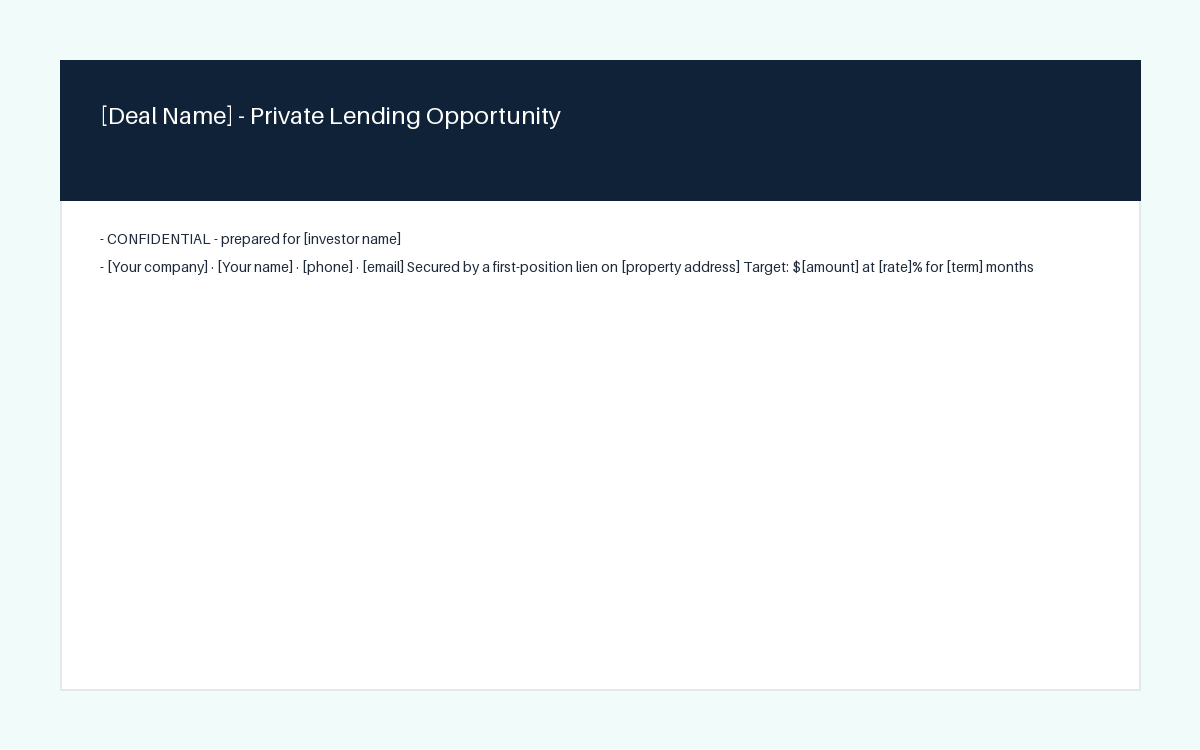
- Confidential cover: target amount, rate, term, and secured property
- Opportunity, Track Record, and Team slides with bracketed proof points
- Deal and Numbers slides: all-in cost, ARV, loan-to-ARV, worst case
- Investment Structure as a term sheet: note, lien, payments, loss-payee
- Projected Returns compared to a CD over the same months
- Security slide: first lien, title insurance, maximum loan-to-ARV
- Timeline with backup exit, Risk Disclosures, Next Steps via escrow
What changes once you use it
- 1Answer the downside question before the lender asks it
- 2Present a loan the way a bank underwrites it: lien, LTV, title, escrow
- 3Reuse one deck per deal by swapping bracketed figures
- 4Risk-disclosure wording already drafted for your attorney to review
- 5Start from a lender-specific outline instead of a blank deck
Common questions
What software do I need?
Microsoft PowerPoint, Google Slides, or Keynote for the .pptx, and any PDF reader for the guide. The deck uses the default Calibri theme with no embedded fonts, media, or macros.
Is this for debt or equity raises?
Debt. Every slide assumes a private loan secured by a recorded first-position lien with interest paid monthly or at exit. It does not include an equity or joint-venture structure; you would rewrite slides 7 to 9 for that.
Are the slides designed with graphics and photos?
No. The 12 slides are clean text on a blank layout so you can apply your own brand theme in one click and add your project photos, logo, and comp appendix. The value is the lender-specific order and wording, not the artwork.
Where do the deal numbers come from?
From your own underwriting. Run the deal in the Fix & Flip Profit Calculator or the BRRRR Strategy Analyzer, then paste the results into slides 5, 6, and 7.
Why not a free pitch deck template or ChatGPT?
Generic startup decks pitch upside. Private lenders fund on security: lien position, loan-to-ARV, title insurance, escrow-only wiring, and what they own if you default. This deck is built around those slides, with the risk-disclosure and not-a-public-offering language already drafted. You could assemble that from scratch, but you would need to already know which slides a lender expects.
📝 Close: Contracts, due diligence, and structure
Got this handled? Here's what comes next in the deal.
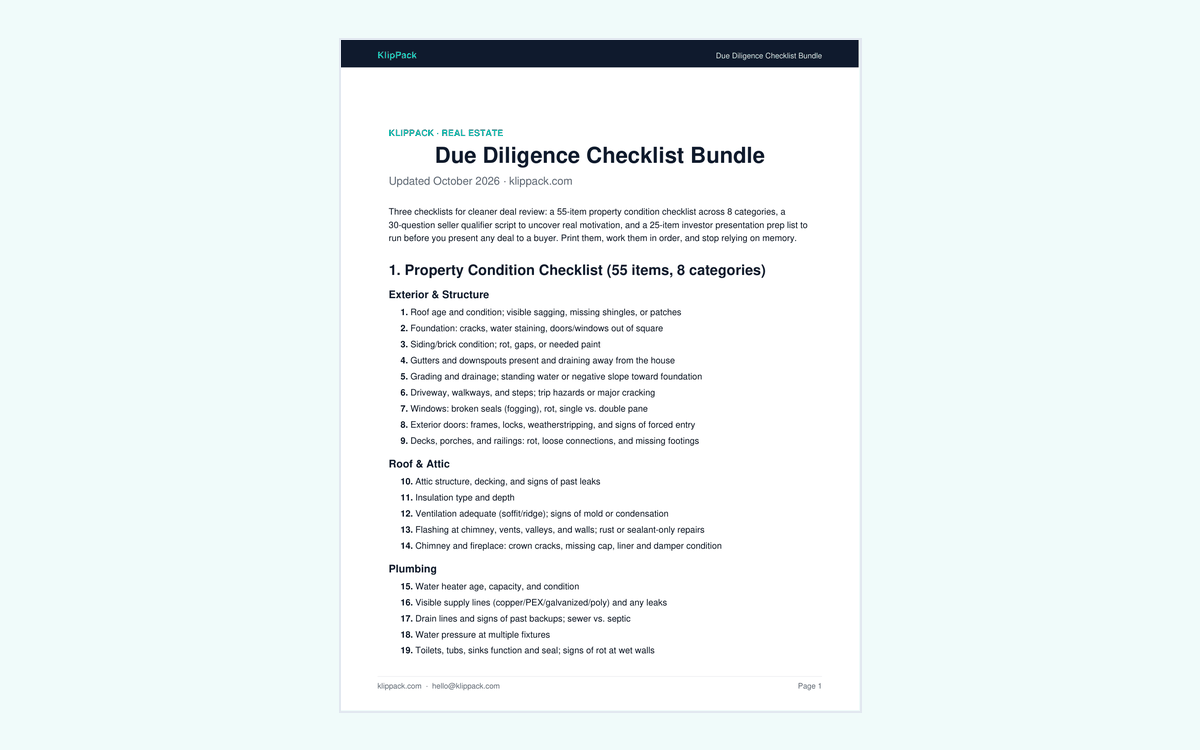
Due Diligence Checklist Bundle
Walk the property, qualify the seller, and package the deal without missing a step
- ✓Property Condition Walkthrough: 55 items across 8 sections
- ✓Exterior, roof, plumbing, electrical, HVAC, interior, safety, lot
- ✓Seller Qualifier Script: 30 questions around the four pillars
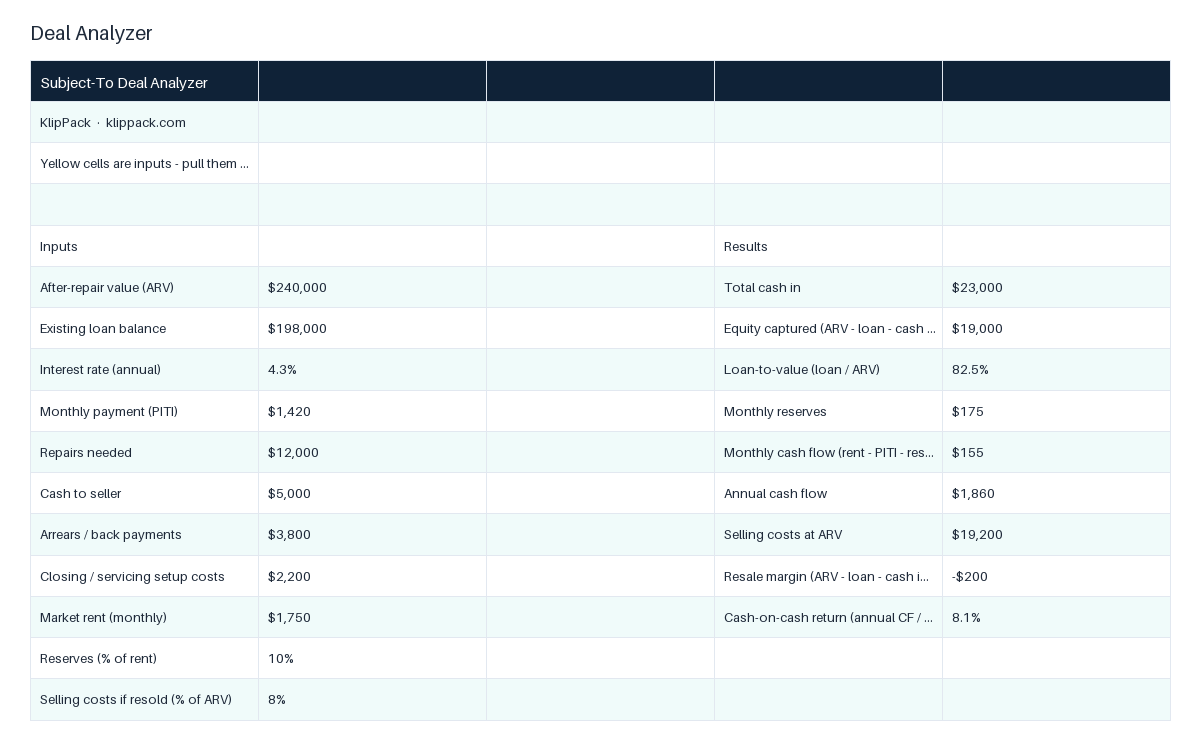
Subject-To Deal Workbook
Underwrite, explain, and document a subject-to deal with the numbers and paperwork
- ✓Excel Deal Analyzer: 15 formulas, 3-test verdict, stress test
- ✓Loan Payoff Schedule: 360 months, linked to the analyzer inputs
- ✓Seller Conversation Script: 6 steps that name the due-on-sale risk
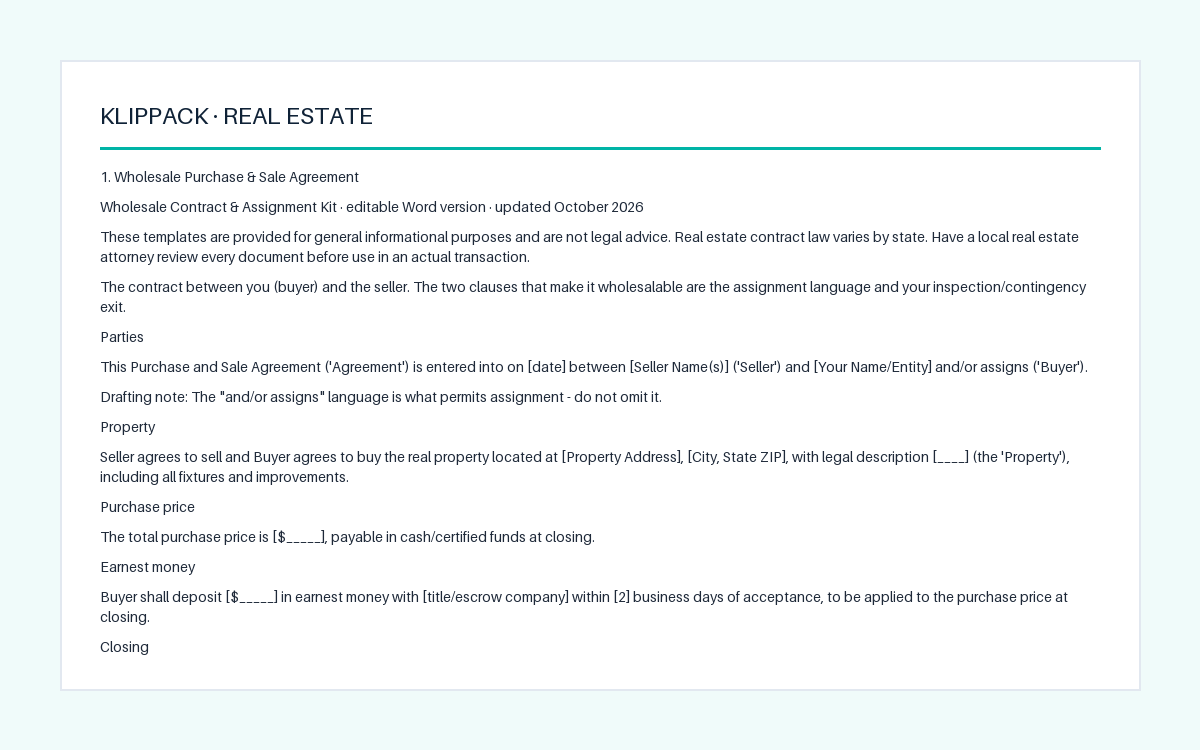
Wholesale Contract & Assignment Kit
The four wholesale documents in editable Word, with the clauses that matter explained
- ✓Wholesale Purchase & Sale Agreement: 11 sections, assignment language
- ✓Assignment of Contract Agreement: fee, deposit, as-is, closing
- ✓Double Close Addendum: two transactions, funding, disclosure, costs