Concrete Estimate Template
Slab and flatwork takeoff to a priced bid in one Excel sheet
An Excel concrete estimating template: enter length, width, and thickness to get square footage and cubic yards with waste, then price ready-mix, rebar, base, forms, labor, and markup into a bid.
Concrete is unforgiving to estimate. Order one yard short and the truck comes back at a short-load fee; order two yards long and the margin went into the washout pit. Most flatwork contractors still do the yardage on a phone calculator and the pricing in their head, so every bid is a little different and none of them show the margin.
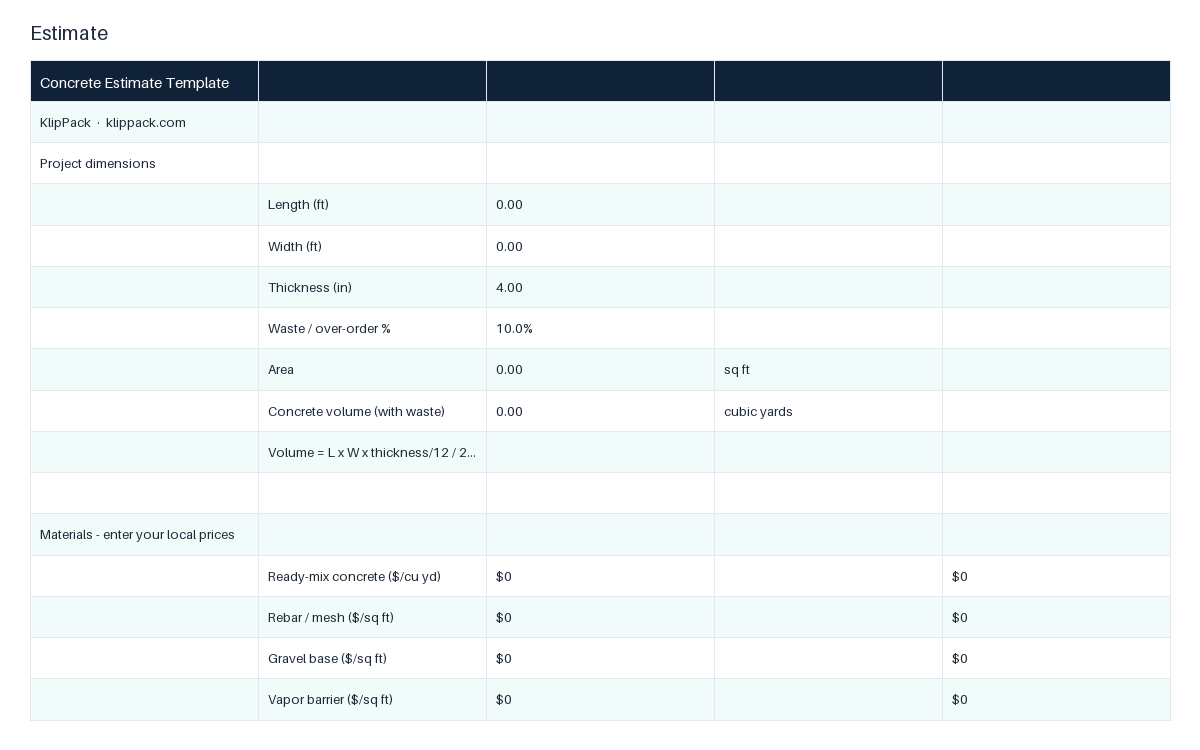
This workbook does the whole quote on one Estimate sheet. Enter length, width, and thickness in inches and it returns square footage and cubic yards, with your waste percentage already added, using the standard L x W x (thickness / 12) / 27 conversion. Seven material lines follow: ready-mix per cubic yard, rebar or mesh, gravel base, and vapor barrier per square foot, plus lump sums for forms, pump truck, and misc items like chairs, sealer, and sawcut. Sales tax is applied to the materials subtotal. Labor uses a productivity figure (square feet placed and finished per crew-hour, default 40) and your burdened hourly rate to produce crew-hours and labor cost. The pricing block takes total direct cost, applies your markup (default 20%), and reports bid price, gross profit, and gross margin, with a one-line reminder of how markup differs from margin. A Price Book sheet holds 12 concrete line items (4-inch and 6-inch slab, footings, stem wall, stamped, sidewalk, driveway, demo and haul, rebar, pump truck, sawcut, sealer) with blank unit-price cells for your local numbers, and a Read Me sheet walks through the four steps. 18 formulas across 3 sheets, no macros.
First 15 minutes: fill the Price Book with the unit prices you already use, enter the dimensions of the last slab you poured, and check whether the bid the sheet produces matches what you charged. If it does not, the margin line tells you which way you were off.
Who it's for
For concrete and flatwork contractors, and general contractors who self-perform slabs, who want a fast, consistent slab quote. Not for someone pricing a full remodel with several trades and overhead; the Contractor Estimating & Job-Profit System is built for that.
Use it when
- A homeowner wants a driveway price today and you need yardage, materials, and a bid in minutes
- You are ordering ready-mix and want the waste factor applied before you call the plant
- You lost money on a patio pour and want to see whether labor or materials ate the margin
- You want every crew lead quoting slabs from the same unit prices
What you download
Every file in the XLSX download.
Inside the files
- Dimensions: length x width x thickness to sq ft and cubic yards
- Materials: ready-mix, rebar or mesh, base, vapor barrier, forms, pump
- Sales tax applied to the materials subtotal
- Labor: crew productivity in sq ft per hour x burdened rate
- Pricing: direct cost, markup, bid price, gross profit, gross margin
- Price Book: 12 concrete line items at your local unit prices
What changes once you use it
- 1Order the right yardage: the waste factor is built into the volume formula
- 2Quote slabs, driveways, sidewalks, and footings the same way every time
- 3See gross margin before you submit the bid
- 4Reuse your saved unit prices on every job from the Price Book
Common questions
What software do I need?
Microsoft Excel or Google Sheets. It is a plain .xlsx with standard formulas and no macros.
Does it size the concrete order?
Yes. It converts length, width, and thickness to cubic yards and adds your waste percentage (default 10%), so the ready-mix order is sized before you call the plant.
Does it handle footings and stem walls, or only slabs?
The volume calculator is built for slabs and flatwork (length x width x thickness). Footings, stem walls, and stamped work are in the Price Book as per-foot and per-square-foot line items you price yourself; there is no separate linear-foot volume formula.
Why not a free template or ChatGPT?
A free sheet or a generated table will give you the yardage formula. This one chains the yardage into material cost by the correct unit (cubic yard for mix, square foot for base and mesh, lump sums for forms and pump), applies tax, converts productivity into crew-hours, and shows the margin on the bid, with a Price Book you fill once.
Want the full system?
For multi-trade jobs, overhead allocation, and a client proposal, see the Contractor Estimating & Job-Profit System.
You might also like
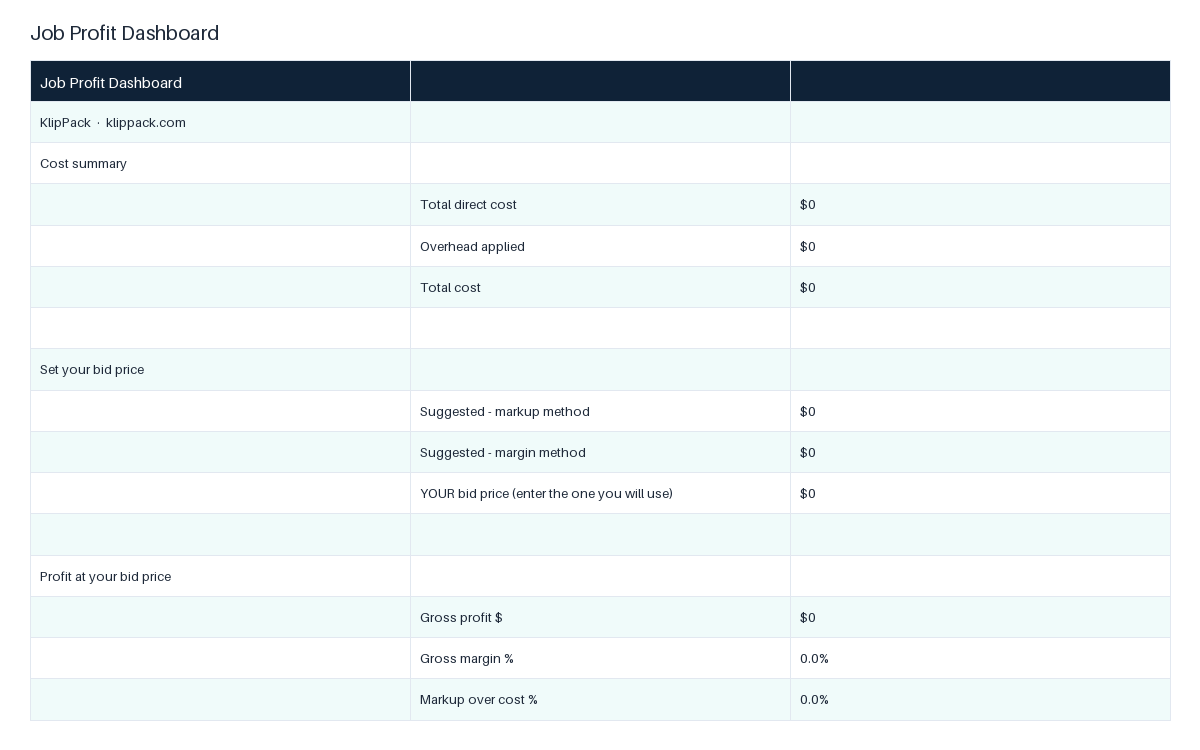
Contractor Estimating & Job-Profit System
Bid every job by the numbers and know your profit before you sign
- ✓Setup tab: labor burden, tax, markup, target margin, overhead per hour
- ✓Materials takeoff: 20 lines, quantity x unit cost, sales tax applied
- ✓Labor tab: 15 tasks, crew x hours x rate, burden added automatically
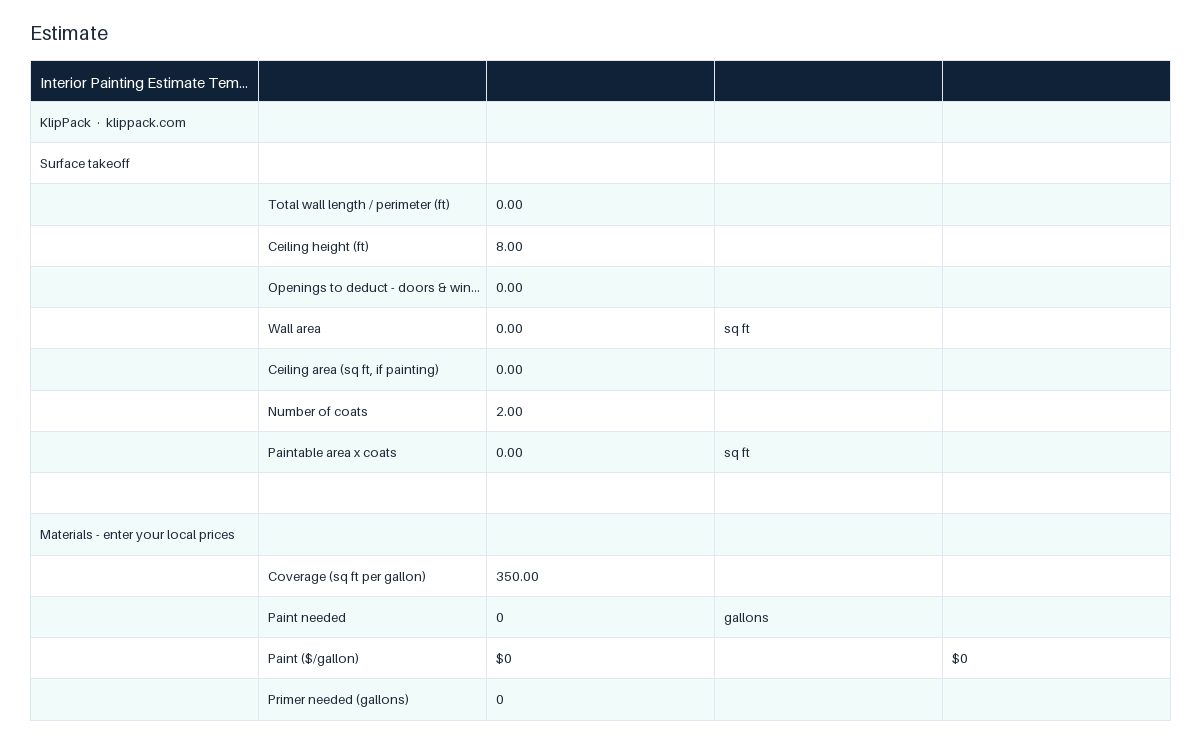
Interior Painting Estimate Template
Wall and ceiling takeoff to gallons, labor hours, and a priced bid
- ✓Takeoff: perimeter x height minus openings, plus ceiling, x coats
- ✓Paint order: gallons rounded up from your coverage per gallon
- ✓Materials: paint, primer, and sundries with sales tax applied
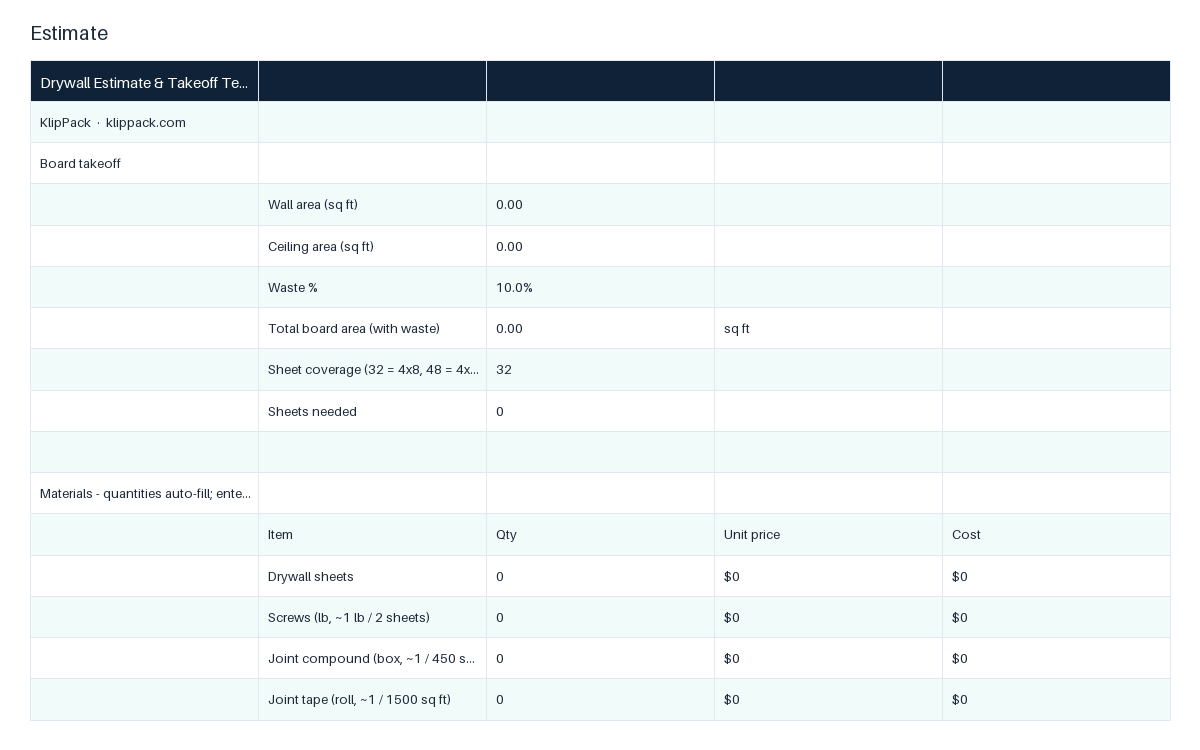
Drywall Estimate & Takeoff Template
Board area to sheets, screws, mud, tape, and a priced bid
- ✓Board takeoff: wall plus ceiling area with waste, rounded to sheets
- ✓Sheet size selector: 4x8 or 4x12 coverage
- ✓Consumables auto-fill: screws, joint compound, tape from board area